JBL 4349 Studio Monitor Review: Professional Audio Performance
The JBL 4349 turns heads in any listening room. This studio monitor brings professional sound into your home. It stands as a true classic reborn for modern audiophiles.
Music lovers want speakers that feel alive. The 4349 delivers a realistic soundstage with a wide sweet spot. You get exceptional clarity in every note.
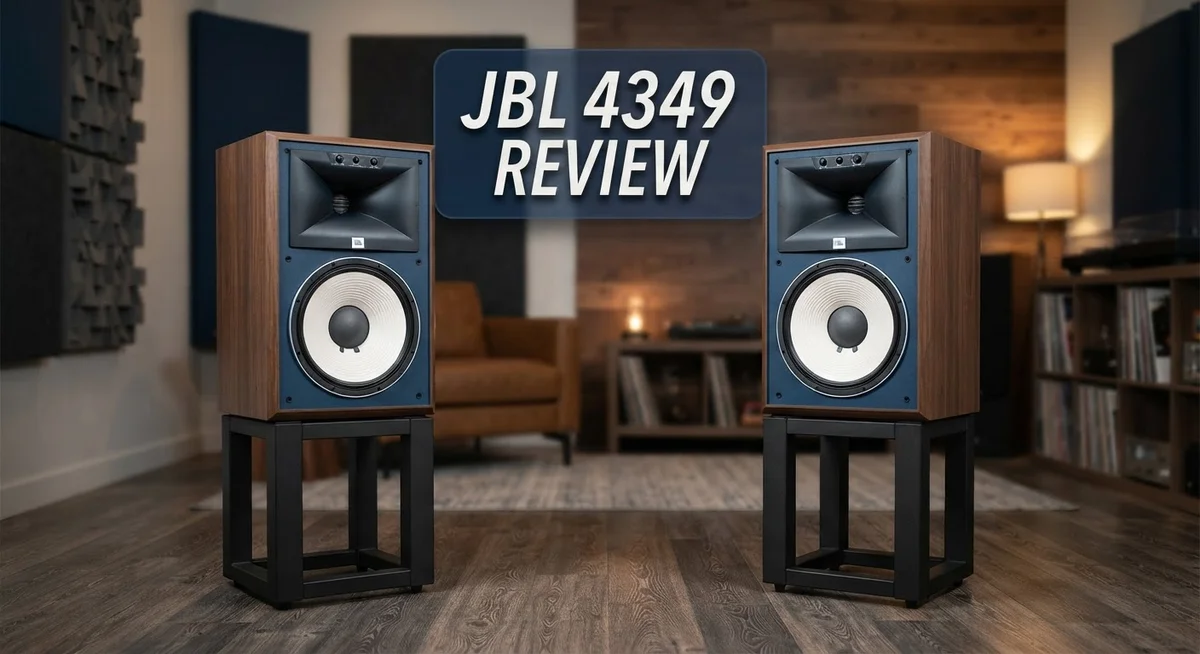
This speaker uses a 12-inch woofer and dual compression driver tweeters. JBL’s patented HDI™ horn technology shapes every sound wave with precision. The result is deep bass and crisp highs together.
Setup feels simple and forgiving. You can place the 4349 near-field or in a traditional room layout. Either way, it sounds stunning.
This review breaks down every feature of the JBL 4349. We cover sound quality, design, and real world performance. Find out why this speaker earns its spot among top studio monitors today.
In a Nutshell
The JBL 4349 delivers studio grade sound for home listening. Here is what stands out most:
-
Patented HDI horn technology shapes sound waves for a realistic soundstage. You get a wide sweet spot, so seating position matters less.
-
Distortion stays extremely low across the frequency range. Measurements confirm this speaker performs at a professional level.
-
The adjustable tweeters let you fine tune treble output. This helps match the sound to your room and personal taste.
-
This speaker plays loud and deep without strain. It handles both soft passages and powerful dynamic swings with ease.
-
Each unit weighs 75 lbs, showing serious build quality. That heft also helps reduce unwanted cabinet vibration.
-
Compared to the Klipsch Forte IV, the JBL 4349 offers a different tonal signature. Both compete in the same high end category.
One thing to note: this speaker is power hungry for its size. Pair it with a strong amplifier to unlock its full potential.
Key Specifications and Driver Technology
The JBL 4349 uses a carefully engineered driver setup that separates it from typical home speakers. The core features a 12-inch woofer made from treated, folded paper. This material choice matters because it balances stiffness with natural damping properties.
The tweeter system deserves special attention. JBL equipped this monitor with dual 1.5-inch compression drivers instead of standard dome tweeters. Compression drivers push sound through a horn rather than radiating it directly. This approach concentrates high frequencies more efficiently across your listening area.
The patented HDI horn technology represents the real innovation here. HDI stands for High Definition Imaging. The radial horn design works differently than traditional rectangular horns. It spreads sound waves in a controlled, spherical pattern. This means you hear consistent treble whether you sit dead center or off to the side.
The compression driver and horn combination creates exceptional clarity in vocals and instruments. String details emerge. Vocal sibilance stays smooth without harshness. Cymbals ring naturally rather than sounding brittle. This technical choice explains why the 4349 measures so well in independent tests.
Weight tells you something important about build quality. Each unit weighs 75 lbs. That mass comes from internal bracing and quality materials. Heavy speakers typically resist vibration better than light ones. Vibration control means cleaner bass and tighter midrange performance.
The driver configuration also affects how the speaker handles power demands. The compression drivers are efficient at converting electrical energy into sound. However, the large woofer still requires substantial amplifier current. Owners should pair this speaker with a quality amplifier rated for at least 100 watts per channel.
Understanding these technical choices helps explain the 4349’s reputation. The driver technology isn’t just about specs on paper. It’s about how sound actually reaches your ears. The combination of a large woofer, compression drivers, and HDI horn creates a speaker that performs like professional studio equipment in a home setting.

- Next level massive JBL Pro Sound: Two woofers, two powerful drivers and dual pumping JBL Bass Radiators...
- 24 hours of playtime plus 6 hours with Playtime Boost: Your listening adventures can last all day long. Take...
- Convenient shoulder strap: The speaker can be carried on the shoulder or can be adjusted as crossbody...

Last update on 2026-11-09 / Affiliate links / Images from Amazon Product Advertising API
Sound Quality and Acoustic Performance
The JBL 4349 delivers sound that feels genuine and alive in any room. You hear music the way it was meant to sound, with clarity that studio professionals expect and home listeners crave.
The acoustic performance starts with how the speaker handles frequencies across the entire spectrum. The 12 inch woofer produces bass that goes deep without muddiness. You get punch and control at the same time. The dual compression driver tweeters handle high frequencies with precision. Together, they create a balanced presentation that never feels harsh or fatiguing, even during long listening sessions.
Distortion measurements tell the real story here. The JBL 4349 performs exceptionally well on technical benchmarks. You notice this immediately when playing complex orchestral pieces or dense rock albums. Every instrument sits in its own space. Vocals emerge from the mix with natural presence. The speaker doesn’t add coloration or artificial brightness.
The realistic soundstage extends well beyond the speaker’s physical size. This happens because of how the horn technology focuses sound waves. You experience width and depth that pulls you into the performance. The sweet spot remains wide, so you don’t need to sit in one exact chair to enjoy the sound.
Dynamic range handling deserves mention too. The 4349 plays quiet passages with detail, then switches to loud sections without compression or strain. Drums crack with impact. Pianos bloom with resonance. Bass lines lock in tight without overpowering other elements.
The adjustable tweeter controls give you fine tuning power. You can dial in the exact brightness level your room needs. This flexibility means the speaker adapts to different music genres and personal preferences.
Real world listening confirms what measurements suggest. Jazz recordings sound intimate and immediate. Classical music maintains proper instrument balance. Electronic music hits hard with controlled low end. The acoustic performance remains consistent whether you play near field or at traditional listening distances. This versatility makes the JBL 4349 a speaker that works harder than typical studio monitors to create engaging, accurate sound in home environments.
Design, Build Quality, and Cabinet Construction
The JBL 4349 cabinet construction reveals serious engineering choices. The speaker sits on a solid foundation with a folded paper cone bass driver that handles low frequencies with control and precision. This material choice matters because paper naturally resists resonance and unwanted vibrations.
The cabinet itself measures substantial dimensions to house the 12 inch woofer properly. JBL designed this enclosure to minimize internal reflections that muddy sound. The internal bracing reduces panel vibration, which keeps your music clean and accurate.
The dual 1.5 inch compression drivers mount inside a patented radial horn design. This horn shapes sound waves before they reach your ears. The geometry matters tremendously for how the tweeter integrates with the woofer’s output.
The build quality shows immediately when you handle the speaker. Heavy construction means less cabinet flex during loud passages. The speaker doesn’t rattle or vibrate in ways that distract from music. Materials feel premium throughout, from the cabinet panels to the mounting hardware.
Ventilation ports sit strategically to let air move freely. This prevents pressure buildup that could compress the woofer’s movement. Proper airflow keeps the drivers operating efficiently, which reduces stress on internal components.
The tweeter mounting system allows you to adjust output by several degrees. This flexibility lets you adapt to different room acoustics and listening distances. You can rotate the tweeter assembly to match your ear level for optimal performance.
Cabinet damping materials absorb unwanted reflections inside the enclosure. This internal treatment prevents sound from bouncing around and coloring the output. The result is cleaner bass response and more transparent midrange reproduction.
The overall construction philosophy prioritizes accuracy over flashy appearance. The speaker prioritizes performance in professional studio settings and demanding home environments. Every design choice serves the goal of revealing exactly what your recordings contain. This approach to build quality explains why the 4349 earns respect among serious listeners and audio professionals alike.
Top 3 Alternatives
Yamaha HS8 Studio Monitor

- 8 inch cone woofer and 1 inch dome tweeter; Produce low distortion sound with a well-defined bottom end at any...
- 38Hz to 30kHz frequency response; Power consumption: 60 watts
- 75W LF plus 45W HF bi amp system 120W total; Level control ( 4dB/center click), EQ: High trim switch ( / 2dB...
Last update on 2026-11-09 / Affiliate links / Images from Amazon Product Advertising API
The Yamaha HS8 brings professional-grade sound to your studio setup. This monitor delivers accurate audio across the frequency spectrum. You get a 8-inch woofer paired with a 1-inch tweeter for clear highs and deep lows.
The HS8 features a room control switch that helps you adjust sound based on your space. It also includes a high-frequency trim switch for customizing the audio to your needs. The cabinet design reduces internal resonance, so you hear pure sound without coloration.
Adam Audio T7V

- INCLUDED - Two Adam Audio T7V 7" studio monitors, power cords, quick start guides, 5-year warranty, and two...
- SUPERIOR SOUND QUALITY - Experience detailed and accurate audio reproduction with the T7V's U-ART tweeter and...
- OPTIMIZED FREQUENCY RESPONSE - Hear every nuance from 45Hz to 25kHz, providing a full spectrum for critical...
Last update on 2026-11-09 / Affiliate links / Images from Amazon Product Advertising API
The Adam Audio T7V stands out with its unique ribbon tweeter technology. This tweeter produces smooth, detailed highs that many engineers prefer. The 7-inch woofer handles midrange and bass frequencies with precision.
This monitor includes multiple input options for flexibility in your setup. You get XLR connections and a volume control knob on the front. The T7V also offers a bass roll-off switch to adapt to different room sizes and acoustic conditions.
KRK Rokit 8 G4

- Professional grade 7“ (bi-amp) studio monitor designed and engineered in the USA
- 7” matching woofer and 1” tweeter made with Kevlar
- Built-in efficient Class D power amp
Last update on 2026-11-09 / Affiliate links / Images from Amazon Product Advertising API
The KRK Rokit 8 G4 combines power with accuracy in studio monitoring. Its 8-inch woofer and 1-inch tweeter create a balanced sound profile. The front-facing port design makes this monitor easy to place in tight spaces.
The Rokit 8 G4 includes room correction controls to help you adapt to various studio environments. You get both XLR and RCA inputs for connecting different audio sources. The monitor features a sleek design that fits modern studio aesthetics while delivering the professional performance you need for mixing and mastering work.
Setup Flexibility and Room Placement
The JBL 4349 gives you real flexibility in how you set up your listening space. These speakers work well in near-field positions where you sit close to them, and they also perform beautifully in traditional room placements further away. This adaptability means you’re not locked into one specific setup style.
The 12-inch woofer and dual compression drivers create a wide sweet spot that forgives less-than-perfect speaker placement. You don’t need to position them with laser precision to get excellent sound. Many listeners find they sound great even when placed slightly off-axis from your main listening position.
Room acoustics matter less with these speakers than with many alternatives. The HDI horn technology focuses sound efficiently, which means the speakers don’t rely as heavily on room reflections to sound their best. Your listening room can be smaller or larger without dramatically changing performance. Treated or untreated spaces both work reasonably well.
The adjustable tweeter controls give you another placement advantage. If your room has bright spots or acoustic challenges, you can dial down the high frequencies slightly. This flexibility helps you adapt to whatever space you’re working with. You’re not stuck with a fixed sound signature.
Weight and stability matter for placement too. At 75 pounds each, these speakers need solid stands or mounting solutions, but their mass actually helps them stay precisely positioned. They won’t shift or move around on lightweight supports. This stability keeps your carefully chosen placement consistent over time.
Ventilation ports on the cabinet require some breathing room behind the speakers. You’ll want at least a few inches of clearance to let air circulate freely. This is a minor consideration that rarely causes problems in real homes.
The forgiving setup nature of the 4349 means you can focus on what matters most: enjoying the music. Whether your room is small or large, treated or untreated, you’ll find these speakers accommodate your space rather than demanding it conform to rigid requirements. This practical flexibility makes them suitable for studios, control rooms, and serious home listening spaces alike.
Power Requirements and Amplification Needs
The JBL 4349 demands serious amplification to unlock its full potential. This speaker is power hungry for its size, which means you need to plan your amp selection carefully.
You should use amplifiers rated between 100 and 300 watts per channel to get the best results. Class D amplifiers work well here because they deliver clean power without excessive heat. Class AB amplifiers also pair nicely if you prefer traditional designs. The key is choosing an amp that can handle the speaker’s impedance curve smoothly.
The 4349’s dual 1.5 inch compression drivers need stable current delivery. Your amplifier must maintain control across the frequency range without clipping or distorting. A quality power supply inside your amp matters more than raw wattage numbers alone. Underpowering these speakers leads to muddy bass and harsh treble, so avoid going below 100 watts.
Room size influences your amplification needs too. Larger rooms require more power to maintain dynamic impact and clarity. Smaller near-field setups can work with slightly lower wattage, though 100 watts remains the practical minimum. The 12 inch woofer responds to clean, stable current delivery rather than peak power bursts.
Your amplifier’s output impedance should stay low, ideally under 0.1 ohms. This keeps the bass driver response tight and controlled. Higher impedance amps can cause the woofer to sound loose and uncontrolled.
Consider your listening habits when selecting power. If you play music at moderate levels in a medium room, 100 to 150 watts suffices. If you demand maximum dynamic range and push volume frequently, aim for 200 to 300 watts. Professional studios typically use 200 watt amplifiers with these monitors.
Quality matters more than quantity when it comes to amplification. A well designed 150 watt amp outperforms a poorly designed 300 watt model. Look for amplifiers with stable power delivery, low distortion specs, and quality cooling systems.
The 4349 rewards careful amp matching with exceptional performance. Invest in proper amplification and you’ll experience the full capabilities of these studio monitors.
Pros and Cons
Pros
- Produces exceptional clarity and detail across the entire frequency range with extremely low distortion
- Delivers realistic soundstage with a wide sweet spot that forgives imperfect speaker placement
- Plays loud and deep without strain, making it easy to fill medium to large rooms
- Adjustable tweeter controls let you fine-tune the sound to match your listening space
- Works equally well in near-field desktop setups or traditional room placements
Cons
- Requires substantial amplification (100 to 300 watts per channel) to perform at its best
- Demands quality amplifiers with low output impedance for optimal results
- Needs adequate breathing room behind the cabinet due to ventilation port design
Who Should Buy It
The JBL 4349 works best for serious music listeners and audio professionals who want studio-grade sound in their home. You should consider this speaker if you spend real time enjoying music rather than playing it casually in the background.
Professional studio engineers and producers benefit most from these monitors. You get honest, accurate sound that reveals every detail in your recordings. The low distortion means you hear exactly what you’re mixing, not what a colored speaker wants you to hear.
Home theater enthusiasts with medium to large rooms find real value here too. You need enough space to let these speakers breathe and perform. The 12-inch woofer delivers the deep bass that makes movies immersive without sounding boomy or muddy.
Audiophiles who prioritize sound quality above all else should look closely at the 4349. You want speakers that reproduce music faithfully across genres. The wide sweet spot means you hear great sound whether you sit dead center or off to the side, which matters for real-world listening.
You must be willing to invest in quality amplification. The 4349 demands 100 to 300 watts per channel to perform at its best. Cheap or underpowered amps will limit what these speakers can do. Your amplifier choice matters as much as the speakers themselves.
Desktop and near-field listeners appreciate the flexibility these monitors offer. You can place them close to your listening position on a desk or shelf. The adjustable tweeters let you dial in the sound for your specific setup without extensive room treatment.
Skip the 4349 if you want a plug-and-play solution with basic amplification. These speakers demand attention to setup, room placement, and amplifier quality. You need to understand how speakers and rooms interact to get the best results.
The 4349 rewards listeners who care about accuracy and detail. You should choose these monitors when faithful sound reproduction matters more than convenience. They’re built for people who listen actively and want to hear music the way artists intended.
Final Verdict
The JBL 4349 stands out as a serious contender for anyone who wants studio grade sound at home. Its engineering reflects decades of JBL’s professional audio expertise.
The patented HDI horn technology gives this speaker a unique edge over typical bookshelf or floor standing designs. This horn design shapes sound waves precisely, creating a listening experience that feels natural and open.
Build quality here is impressive. Each unit weighs 75 pounds, reflecting the dense internal bracing and quality materials JBL used. The treated, folded paper cone woofer adds warmth without sacrificing accuracy.
When you compare the 4349 to its main rival, the Klipsch Forte IV, you’ll notice different design philosophies. Klipsch leans toward a vintage voicing while JBL focuses on studio accuracy and neutrality. Your personal taste in sound character should guide this choice.
Power requirements remain the biggest consideration before buying. This speaker demands serious amplification to shine, so factor that into your overall setup plans.
Think about your room and listening habits honestly. If you have a dedicated listening space and appropriate amplification, the 4349 rewards you generously.
For casual listeners who want simple setups, other options might suit better. This speaker asks for commitment in return for exceptional results.
Sound quality here reaches reference monitor levels. You get transparency and detail that reveals every nuance in your music collection.
The overall package suits dedicated audiophiles and professionals most. If that describes you, this speaker deserves strong consideration.
For everyone else, weigh your listening priorities carefully first. The JBL 4349 rewards patience and proper setup with sound quality that few competitors can match at this level.
Ultimately, this speaker represents a long term investment in your listening experience. Choose it if you value precision, dynamics, and studio grade performance above convenience.
Frequently Asked Questions
Do the JBL 4349 speakers work in small rooms?
Yes, they do. These monitors adapt well to different spaces. The adjustable tweeter controls let you dial in the sound for your specific room. Near-field placement works great for desktop setups. If you have a smaller listening area, position them closer and use the tweeter adjustment to reduce brightness. The wide sweet spot forgives imperfect placement, so you have flexibility.
How much amplification do I really need?
The 4349 is power hungry for its size. Plan on 100 to 300 watts per channel minimum. Cheap or underpowered amps will limit what these speakers can do. Use quality amplifiers with low output impedance. This investment matters more than you might think. Pairing them with proper amplification unlocks their full potential.
Are these good for home theater?
Absolutely. Medium to large rooms benefit from their ability to play loud and deep without strain. Home theater fans appreciate the exceptional clarity and dynamic range. The realistic soundstage works well for movies and music alike. Just remember they still need solid amplification to shine in a theater setup.
What makes the HDI horn technology special?
The patented HDI horn design uses a radial horn approach. This gives the 4349 a unique edge over standard bookshelf or floor standing speakers. The dual compression driver tweeters mount in this special horn. The result is impressive clarity and detail across the frequency range. This technology contributes to the speaker’s reference monitor quality sound.

DK is a tech enthusiast and product reviewer dedicated to helping readers navigate the ever-evolving world of technology. With a passion for testing and comparing the latest gadgets, software, and AI tools, DK breaks down complex tech into simple, actionable insights for everyday users.