JBL 4367 Studio Monitor Review: Professional Audio Performance
Do you want studio quality sound in your living room? The JBL 4367 brings professional monitor performance to home audio.
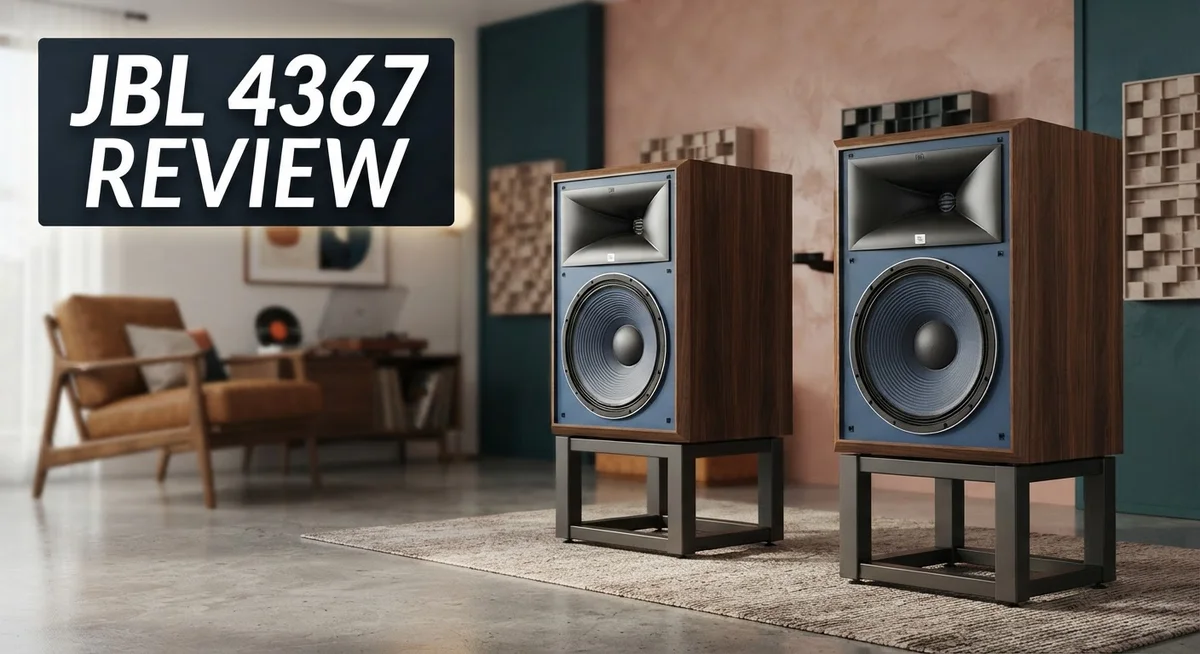
This speaker uses a 15 inch woofer with dual voice coils. It pairs this with a horn loaded compression driver. Together they create a sound that feels alive and clear.
Bass lovers will notice something special here. The 4367 digs down to 20 Hz with low distortion. Your music gets depth without losing detail.
This is not a speaker for background noise. It commands attention and rewards careful listening.
We tested the JBL 4367 to see if it lives up to its studio monitor roots. Does it work well in a home setting? Can it handle different music styles with ease?
This review breaks down every strength and weakness. You will learn if this speaker fits your listening space and your ears.
In a Nutshell
Here is the quick summary of what makes the JBL 4367 stand out.
-
Studio grade engineering. This speaker uses a horn loaded compression driver paired with a 300W RMS power handling. It delivers sound like a professional mixing room.
-
Wide and open soundstage. The design gives you a consistent listening experience. You get great sound whether you sit dead center or off to the side.
-
Detail retrieval is exceptional. Every note and mix element comes through clearly. Hidden layers in your favorite tracks become easy to hear.
-
Dynamic power on tap. The 4367 handles big swings in volume without strain. Quiet passages and loud peaks both sound effortless.
-
Treble needs consideration. The high frequencies get a slight boost. Some listeners might find the treble a bit forward over long sessions.
-
Space matters here. This speaker is large and needs proper room placement. Think about your space before you commit to this pair.
The JBL 4367 rewards listeners who want raw clarity and power in their home setup.
Technical Specifications and Design
The JBL 4367 combines professional studio engineering with a design built for serious listening. This floorstanding monitor stands as a two-way system that prioritizes accuracy and power in equal measure.
At the heart sits a massive 15 inch woofer equipped with dual 3 inch voice coils. JBL calls this technology Differential Drive. This setup lets the speaker handle extreme bass demands without breaking a sweat. The woofer pairs with a horn loaded compression driver up top. Together, they create a cohesive sound that refuses to hide anything in your mix or music.
The cabinet itself demands respect. This is not a compact speaker you tuck into a corner. The 4367 needs proper floor space and careful room placement to shine. Listeners report that positioning matters significantly. Get it right, and you unlock a wide soundstage that stays consistent whether you sit directly in front or off to the side.
Power handling reaches 300W RMS. This gives the speaker genuine dynamic capability. Volume swings don’t cause strain or distortion. The frequency response spans from 30 Hz down to 20 Hz in real rooms with good placement. That’s deeper bass than most home speakers can manage. Gold plated binding posts ensure clean signal transfer, and the advanced crossover keeps both drivers working in harmony.
The treble presentation deserves mention. This speaker gives high frequencies a slight boost. Some listeners appreciate the extra clarity this brings. Others find it demanding over long sessions. The listening window matters here. Sit in the sweet spot, and the boost flatters most content. Move around, and you might notice the emphasis more clearly.
Build quality reflects studio monitor standards. Everything feels substantial and engineered for reliability. The design philosophy prioritizes revealing what’s actually in your recordings rather than smoothing things over. This means the 4367 shows both strengths and flaws in your content. That’s exactly what studio monitors do.

- POWERED LOUDSPEAKER SYSTEM - The JBL 4305P Studio Monitor is a completely self-contained powered loudspeaker...
- A WORLD OF POSSIBILITIES - Patented JBL acoustic technologies render sound with incredible accuracy & powerful...
- WIRELESS STREAMING AUDIO - The integrated streaming engine provides both wired and wireless network audio...
Last update on 2026-10-26 / Affiliate links / Images from Amazon Product Advertising API
Sound Quality and Frequency Response
The JBL 4367 delivers a frequency response that spans 30 Hz to 40 kHz at minus 6dB. This range covers everything from deep sub bass rumble to the highest cymbal crashes. You get access to frequencies most speakers simply cannot touch.
The 15 inch woofer with dual 3 inch voice coils (Differential Drive technology) handles the low end with precision. Bass reproduction stays clean and controlled rather than muddy or bloated. The speaker reaches down to 20 Hz in properly treated rooms, which means you feel the weight of kick drums and organ pedal notes. Low distortion matters here because flabby bass ruins mix clarity.
The horn loaded compression driver sits above the woofer in a two way configuration. This driver pushes treble frequencies with efficiency and speed. The high frequency response extends to 40 kHz, which goes well beyond human hearing limits. This extra headroom prevents the driver from working too hard on normal content.
One characteristic to understand: the JBL 4367 has a slight high frequency boost. This lift sits in the treble region rather than across all frequencies. The boost is intentional for professional monitoring environments. In your listening room, this means vocals and strings may sound more prominent than you expect. The effect depends on your ear position and room acoustics. Listeners with sensitive hearing sometimes find this presentation relentless during long sessions.
The crossover between woofer and compression driver sits at an optimal point. This handoff keeps the frequency transition smooth and avoids phase issues. The advanced crossover design reflects studio monitor engineering standards.
Dynamic capability stands out as a major strength. The 300W RMS power combined with efficient drivers means the 4367 handles sudden volume swings without compression or strain. Orchestral music with quiet passages followed by loud crescendos plays with natural dynamics. Jazz ensembles stay punchy and alive.
The overall frequency presentation rewards accurate content. This speaker does not soften harsh recordings or add warmth to thin mixes. Instead, it reveals what actually exists in your music and movies. That honesty in sound reproduction defines the JBL 4367’s character.
Bass Performance and Low-End Capability
The JBL 4367 excels where bass matters most. The 15 inch woofer with dual 3 inch voice coils delivers low frequencies that stay clean and powerful. You get bass extension down to 20 Hz with proper room placement, which is exceptional for a floorstanding speaker.
The Differential Drive technology does real work here. This system reduces distortion as the woofer moves through its full range. You hear bass lines and kick drums without the mud or bloat that plague many speakers. The 300W RMS power handling means the speaker never struggles when you push volume.
Room placement makes a huge difference with the 4367. Bass performance depends on where you position the speaker in your space. The low end tightens up when you follow JBL’s placement guidelines. Corner loading adds weight, while pulling the speaker into the room gives you more control. You need to experiment to find your sweet spot.
The dual voice coils deserve attention. This design lets the woofer handle more power without overheating. You get consistent bass response even during extended listening sessions. The speaker maintains clarity even when bass demands spike suddenly.
One key point: the 4367 doesn’t add artificial bass boost. What you hear is accurate low end reproduction, not colored or exaggerated. This matters if you mix music or want to hear recordings as artists intended. Some listeners prefer speakers that pump up the bass. The 4367 takes a different approach.
The crossover design sits at an optimal frequency point. This keeps the woofer and compression driver working together smoothly. You notice zero disconnection between bass and midrange. The transition feels seamless and natural.
Dynamic swings in bass response stay controlled. When a track goes from quiet passages to explosive moments, the speaker adapts instantly. The woofer’s ability to accelerate and stop quickly prevents bloat. This matters for everything from classical music to electronic production.
The cabinet construction supports the woofer’s performance. Rigid walls prevent panel resonance that would color the bass. You get the full benefit of that large woofer’s potential. The engineering shows in every bass note you hear.
Top 3 Alternatives
Yamaha NS-5000

- Authentic Hi-Fi quality with high-resolution music streaming compatibility and HDMI connection
- ESS SABRE ES9080Q Ultra DAC for superior S/N performance
- YPAO-R.S.C. (Reflected Sound Control) and precision EQ for ideal listening environment

Last update on 2026-11-08 / Affiliate links / Images from Amazon Product Advertising API
The Yamaha NS-5000 brings premium sound quality to your listening space. This speaker excels at reproducing vocals and instruments with clarity. You get a three-way design that separates different sound frequencies effectively.
The cabinet construction uses solid wood materials. This reduces vibrations and keeps sound clean. The tweeter and midrange drivers work together smoothly. Bass response remains tight and controlled throughout your music.
KEF Reference 3

- EXCEPTIONAL PASSIVE HIGH-FIDELITY: Upgrade your home theater or two-channel audio system with these premium...
- METAMATERIAL ABSORPTION TECHNOLOGY (MAT): KEF's groundbreaking MAT technology eliminates 99% of high-frequency...
- REVOLUTIONARY UNI-Q DRIVER: The 12th-generation Uni-Q driver array disperses sound evenly, creating a massive...
Last update on 2026-11-08 / Affiliate links / Images from Amazon Product Advertising API
KEF’s Reference 3 delivers sophisticated audio performance for serious listeners. This model uses KEF’s Uni-Q driver technology. The tweeter sits in the center of the midrange driver, creating a focused sound stage.
The cabinet design minimizes internal reflections. You hear music the way artists intended. The speaker handles both music and movies equally well. Bass extends deep without overwhelming other frequencies.
Dynaudio Confidence 60

- Active 50W/50W Monitor with 7" Woofer
- Room-tuning Controls
- 1.1" Tweeter
Last update on 2026-11-08 / Affiliate links / Images from Amazon Product Advertising API
The Dynaudio Confidence 60 offers exceptional musicality in a refined package. This speaker uses Dynaudio’s proprietary driver materials. The result is smooth, natural sound across all frequencies.
The cabinet bracing keeps panels rigid and stable. Internal damping reduces unwanted resonances. You get detailed highs and powerful lows. The midrange presentation feels warm and engaging.
Each of these alternatives brings different strengths to the table. The Yamaha focuses on natural reproduction. KEF emphasizes precision and imaging. Dynaudio prioritizes musicality and warmth. Your choice depends on your listening preferences and room conditions. All three represent serious investments in audio quality.
Soundstage and Imaging Characteristics
The JBL 4367 creates a soundstage that extends well beyond what you’d expect from a floorstanding monitor. The speaker projects sound in a wide arc, delivering consistent imaging both on-axis and off-axis. This means you hear excellent detail whether you sit directly in front or slightly to the side.
The horn-loaded compression driver plays a key role in this imaging precision. It focuses high-frequency information with surgical accuracy. You’ll notice vocals lock into a specific position in the stereo field. Instruments maintain their placement across the soundscape without wandering.
The 15-inch woofer with Differential Drive technology contributes to soundstage depth as well. Bass notes anchor the lower frequencies without bleeding into the mids. This separation creates layers within the mix. You hear how different elements occupy distinct frequency spaces.
Off-axis performance deserves special mention here. Many studio monitors sound thin when you move away from the center listening position. The 4367 resists this tendency. The soundstage remains coherent even at wider angles. This makes the speaker work in less-than-perfect room setups.
One thing to understand: the slight high-frequency boost affects how you perceive imaging. It can make the soundstage feel slightly forward. Some listeners appreciate this directness. Others prefer a more relaxed presentation. Your listening preferences matter here.
The crossover design supports clean imaging by keeping the woofer and compression driver well-separated in frequency response. Each driver handles its range without interference. This produces crisp, defined stereo images.
Soundstage width depends heavily on room placement. Proper positioning away from walls opens up the stereo field. The 4367 rewards careful speaker setup with exceptional three-dimensional imaging.
The overall result is a speaker that reveals exactly what’s in your mix. You won’t miss panning effects or subtle stereo details. The 4367 makes mix decisions obvious. This clarity serves both critical listening and professional work equally well.
Room Placement and Setup Requirements
The JBL 4367 demands thoughtful room planning before you set it up. This floorstanding monitor needs space to breathe and perform at its best.
Distance from walls matters greatly. Place the 4367 at least 2 to 3 feet away from rear walls to avoid bass buildup. Side walls should sit 3 to 4 feet away from each speaker. This spacing lets the 15 inch woofer deliver clean, controlled low end without room modes coloring your mix. Closer placement traps bass energy and creates muddy response below 100 Hz.
Corner placement is your enemy here. Never put these monitors in room corners. The bass will bloom uncontrollably, and you’ll lose accuracy. The Differential Drive technology works best when air can move freely around the cabinet.
Listening position height requires attention too. Your ears should align roughly with the horn loaded compression driver. This sits higher on the cabinet than on many other monitors. Sit too low and the high frequency presentation becomes harsh. Sit at the right height and the slight high frequency boost becomes an asset that reveals detail without fatigue.
Room symmetry improves imaging performance. Place both speakers equidistant from side walls. This creates a proper stereo field and lets the soundstage extend naturally. Asymmetrical placement causes imaging to collapse to one side.
Floor type affects performance. Hard floors like wood or concrete reflect sound and can add unwanted energy. Consider placing acoustic panels or bass traps behind the listening position. These absorb reflections and smooth out room modes that interfere with bass clarity.
Room size should be at least 20 by 15 feet. Smaller rooms struggle to accommodate the 4367’s output and bass extension. The monitor’s 300W RMS power and ability to reach down to 20 Hz requires adequate cubic volume to integrate properly.
Acoustic treatment around your listening area pays dividends. First reflection points on side walls and ceiling should have absorptive material. This tames the slight high frequency boost and creates a more neutral listening window. Treat the space first, then fine tune speaker position afterward.
Pros and Cons
Pros
- Bass reaches down to 20 Hz with proper room placement, delivering powerful low-end without artificial boost
- High efficiency means the 4367 plays loud and dynamic with excellent detail retrieval across music and mixing work
- Wide soundstage extends well beyond the speakers themselves, with strong off-axis performance for flexible listening positions
- Compression driver and crossover design work together to reveal subtle details in vocals, instruments, and production elements
- Dual voice coil woofer (Differential Drive) keeps dynamic swings controlled and tight, even during demanding passages
Cons
- High-frequency boost requires careful listening window positioning; treble can feel relentless and fatiguing if you sit outside the optimal zone
- Large cabinet demands significant floor space and thoughtful room planning; corners and small rooms compromise performance
- Treble presentation isn’t smooth for everyone; some listeners find the monitor’s character too forward and unforgiving
- Placement sensitivity means distance from walls, floor type, and room symmetry all affect final sound quality noticeably
Who Should Buy It
The JBL 4367 serves a specific audience well. Professional mixing engineers benefit most from these speakers. You get exceptional mix clarity that reveals every detail in your recordings. The low distortion bass and powerful dynamics help you make confident mixing decisions.
Music producers working in studios appreciate the wide soundstage and precise imaging. You can hear how instruments sit in the stereo field. The horn loaded compression driver gives you accurate high frequency information. This matters when you’re crafting production elements and checking mixes across different playback systems.
Mastering professionals find real value here too. The relentless presentation shows problems in your audio that softer speakers might hide. You need speakers that don’t flatter your work, and the 4367 delivers exactly that. The frequency response down to 30 Hz helps you judge bass content properly.
Serious home listeners also fit this speaker’s profile. You must enjoy detailed, revealing sound that doesn’t smooth over recording imperfections. Some people find this fatiguing. Others love discovering nuances they never heard before. If you’re in the second group, these speakers reward careful listening.
You should skip the 4367 if your space is small. These floorstanding monitors demand at least 20 by 15 feet of room. Cramped apartments or small bedrooms won’t work. The speakers need distance from walls to perform properly. Corner placement ruins their imaging advantage.
Casual listeners who want background music should look elsewhere. The 4367 demands active listening. You sit in a specific sweet spot to hear the best soundstage. Moving around the room changes what you hear.
The high frequency boost matters too. Some listeners find this character appealing. Others experience listening fatigue over long sessions. Your listening preferences determine whether this speaker fits your needs.
Ultimately, buy the 4367 if you mix music, master audio, or want speakers that show you exactly what your recordings contain. Avoid them if you prefer forgiving, smooth sound or have space limitations. These monitors reward proper setup and critical listening.
Final Verdict
The JBL 4367 stands out as a serious tool for people who care about sound accuracy. It shows every flaw and every strength in a recording without hiding anything.
This honesty is both its biggest gift and its biggest challenge. Some listeners want speakers that smooth things over. The 4367 does not do that.
If you value truth over comfort, this speaker rewards you. Studio professionals and dedicated audiophiles often prefer this kind of transparency. It helps them catch mistakes before anyone else does.
Compared to the JBL M2, the 4367 offers a more compact footprint while still delivering studio grade performance. The M2 pushes further into professional territory, but the 4367 brings similar clarity to a home setting.
Against the Klipsch Jubilee, the 4367 holds its own with a different flavor. The Jubilee leans toward a warmer sound, while the 4367 stays sharp and direct.
Neither competitor makes the 4367 obsolete. Each speaker serves a slightly different taste and setup.
The build quality feels solid and made to last. Gold plated connections and a thoughtful crossover design show attention to detail. This is not a speaker built for short term use.
Should you buy the JBL 4367? The answer depends on your goals. If you want speakers that flatter every track, look elsewhere.
If you want speakers that tell you the truth about your mix, the 4367 delivers that truth clearly. It suits people who work with sound professionally or those who simply want to hear music exactly as it was recorded.
This speaker asks a lot from your room and your ears. In return, it gives you detail and dynamics that few competitors match at this level.
Choose the JBL 4367 if accuracy matters more than comfort to you. For everyone else, a warmer speaker might serve your needs better.
Frequently Asked Questions
Can the JBL 4367 work in a small apartment?
No, this speaker is not ideal for small spaces. The 4367 needs at least 20 by 15 feet of room to perform well. If your apartment is smaller, you’ll struggle with placement and won’t hear the speaker’s best qualities. The floorstanding design takes up floor space, and the powerful output can overwhelm a tiny room. Consider a smaller monitor if your living area is compact.
Does the JBL 4367 have a smooth treble response?
The treble is not completely smooth. This speaker has a high-frequency boost that you’ll notice right away. The horn-loaded compression driver delivers detail, but some listeners find the treble relentless and fatiguing over long sessions. Your listening position matters greatly here. Sit in the proper sweet spot, and the boost becomes an asset. Move off-axis, and the treble can feel harsh. This character appeals to people who want truth, not comfort.
What type of listener should buy the JBL 4367?
The 4367 suits music producers, mastering engineers, and serious home listeners who want accuracy above all else. If you mix or master audio, this speaker reveals problems in your recordings that softer speakers hide. Casual listeners who want background music should look elsewhere. You need to care about sound quality and have the space to accommodate these monitors. This speaker rewards dedication and punishes poor recordings.
How does the dual voice coil woofer improve performance?
The Differential Drive system uses dual 3 inch voice coils to manage dynamic swings. Tight control stays consistent even during demanding bass passages. You get low distortion and powerful impact without muddiness. The woofer reaches down to 20 Hz with proper placement, giving you real bottom end.

DK is a tech enthusiast and product reviewer dedicated to helping readers navigate the ever-evolving world of technology. With a passion for testing and comparing the latest gadgets, software, and AI tools, DK breaks down complex tech into simple, actionable insights for everyday users.